
Maintenance
Getting Your Cork Roof Ready for Winter: An October Checklist
Eight roof checks to do in October before the Cork storm season: gutters, slates, ridge, chimney flashing, valleys, moss, attic and flat roofs.

I'm Michael Casey, founder of Keystone Roofing. October is when our phones start ringing with leaks, and most of those calls trace back to something that could have been spotted in September or October: a blocked gutter, a slipped slate, a cracked ridge, a gap in the flashing. A roof that goes into winter in good order usually comes out of it the same way.
This is the checklist we'd run on our own houses before the first big autumn storm. Most of it you can do from the ground with binoculars and a torch in the attic; the rest is where a roof repair specialist earns their keep.
Before winter, clear the gutters and downpipes after the leaves have fallen, check from the ground for slipped or missing slates and tiles, look for cracked ridge mortar and lifted flashing around chimneys, check the attic for damp patches or daylight, and clear moss from valleys. Get anything loose fixed before the storms, because wind gets under a loose slate and strips the ones around it.
Why should you check your roof in October?
Ireland's named-storm season runs through autumn and winter, with Met Éireann issuing wind and rain warnings as systems arrive off the Atlantic (Met Éireann warnings). Small defects that sat quietly all summer get tested hard in the first gale. October is the sweet spot: the leaves are mostly down, the weather is still dry enough to work on roofs, and roofers aren't yet booked out with emergency callouts.
The October roof checklist for Cork homes
1. Clear gutters and downpipes
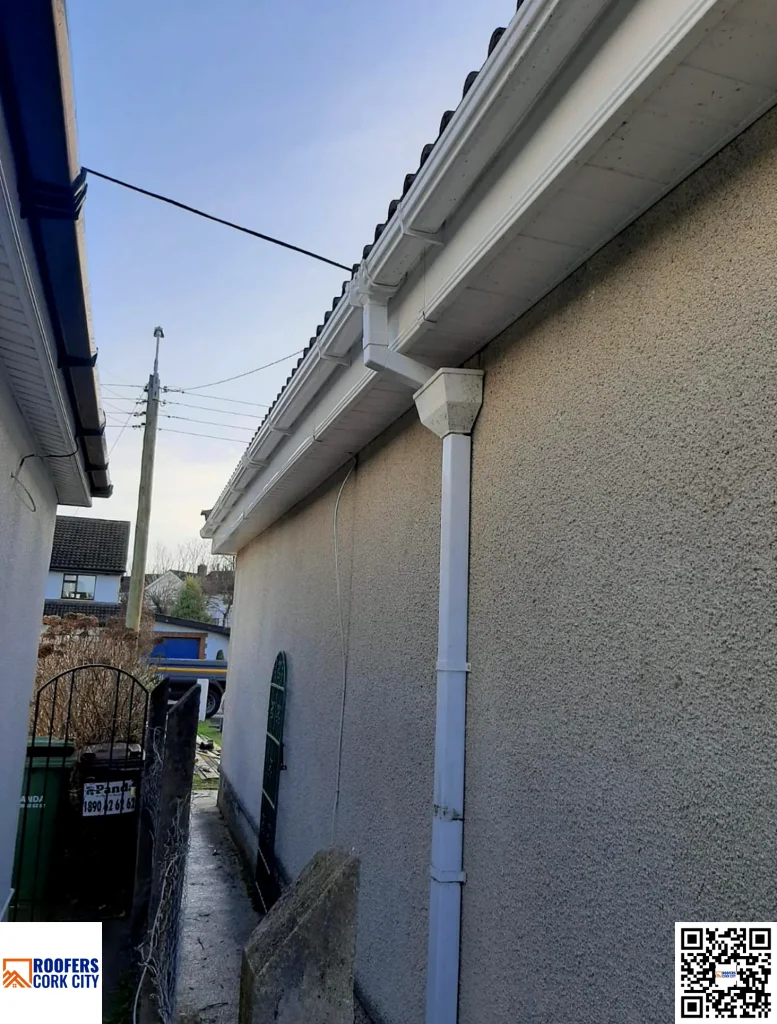
Blocked gutters overflow down walls, soak fascia boards and push water back under the bottom row of slates. Clear them once the leaves have dropped, and check the downpipes run freely; a hose down the top quickly tells you. If the gutters sag or leak at the joints, that's a gutter repair job, not a cleaning one. Our guide to how often to clean gutters in Cork covers the timing in more detail, and we offer gutter cleaning if you'd rather not use a ladder.
2. Look for slipped, cracked or missing slates and tiles
From the ground or a neighbour's window, scan each roof slope for gaps, slates sitting lower than their neighbours, or pieces lying in the gutter. One loose slate is a cheap fix in October and a much bigger one after a storm lifts the slates around it.
3. Check ridge and hip tiles
On older Cork roofs the ridge tiles are bedded in mortar that cracks and washes out over time. Look for gaps along the ridge line or loose tiles; a ridge tile coming off in high wind is dangerous as well as a leak risk.

4. Inspect chimney flashing and pointing
The chimney is one of the most common sources of winter leaks. Look for lead that has lifted away from the brickwork, cracked mortar on the stack, and damp patches on the chimney breast inside. Our chimney leak diagnosis guide explains the usual causes; for repairs see chimney repairs in Cork.
5. Clear the valleys
Valleys, where two roof slopes meet, carry a lot of water in a short space. Leaves and moss build up in them and cause water to overflow under the slates. If you can see debris in a valley, get it cleared; if the valley lining is cracked or worn, see our roof valley repairs page.
6. Deal with heavy moss
Moss holds water against the roof and its debris blocks gutters and valleys. Light moss isn't an emergency, but thick clumps should be removed carefully before winter. Pressure-washing slates or tiles can do more harm than good; our guide to removing moss safely explains why.
7. Look inside the attic
On a dry day, take a torch into the attic. Look for damp or stained timbers, wet insulation, and chinks of daylight through the roof. Droplets on the underside of the felt on cold mornings usually mean condensation rather than a leak; see our attic condensation guide to tell the two apart.
8. Check flat roofs and rooflights
On extensions and garages, check for ponding water, blisters or splits, and make sure outlets are clear of leaves. Rooflight seals are a common winter leak point.
When should you get a professional roof inspection?
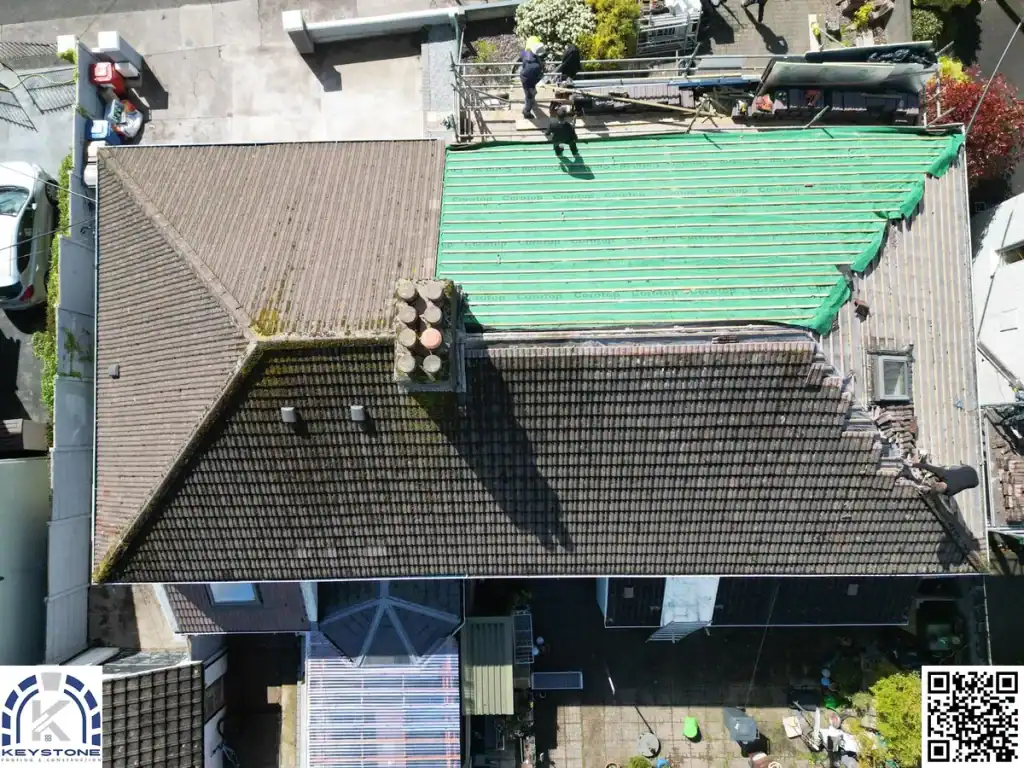
Book an inspection if you spotted anything on the checklist you can't safely reach, if the roof is over 25 years old and hasn't been looked at in a few years, or if you've had leaks in previous winters. A drone roof inspection photographs every slope without anyone walking on the roof, which also gives you a dated record of its condition.
What should you do if a storm damages your roof anyway?
Stay off the roof and away from fallen slates. Photograph the damage from the ground, put a bucket under any drip and move valuables, then call a roofer for a temporary weatherproofing repair. If water is coming in, our emergency roof repair team responds across Cork City and County. If you plan to claim, read our storm damage insurance guide before you speak to your insurer.
Want your roof checked before the storms?
We'll inspect the slopes, ridge, chimney, valleys and gutters and give you a written report and a fixed ex-VAT quote for anything that needs doing. Call 087 223 4228 or get in touch.
See Roof Repairs CorkOctober Winter Roof Checklist for Cork — FAQs
01When should I get my roof checked before winter?
October is ideal in Cork: most leaves have fallen so gutters can be cleared once, the weather is usually still dry enough to work on roofs, and roofers are not yet booked out with storm callouts.
02What should I check on my roof before winter?
Gutters and downpipes, slipped or missing slates and tiles, ridge and hip tiles, chimney flashing and pointing, valleys, heavy moss, the attic for damp or daylight, and flat roofs and rooflights for ponding, splits and blocked outlets.
03Is moss on my roof a problem in winter?
Light moss is not an emergency, but thick clumps hold water against the roof and their debris blocks gutters and valleys. Remove heavy moss carefully before winter and avoid pressure-washing slates or tiles.
04What should I do if a storm damages my roof?
Stay off the roof, photograph the damage from the ground, catch any drips and move valuables, then call a roofer for a temporary weatherproofing repair. If you plan to claim, contact your insurer before permanent repairs start.

Michael Casey, Founder & Master Roofer
Michael Casey is the founder of Keystone Roofing and Construction. He has been on Cork roofs since 2000 and has completed 500+ roofing projects across County Cork and Tipperary.
Keystone Roofing and Construction - CRO Business Name No. 752205 - Fully insured (AXA Policy 12/28/150946921)
More Keystone roofing guides
Gutter Cleaning Frequency Cork
How often Cork homes actually need gutter cleaning, broken down by location and tree exposure. Includes typical 1970 Cork prices, the damage chain from blocked gutters, and warning signs to act on before the fascia rots.
Storm Damage Roof Insurance Claims Ireland
How Irish home insurance covers storm damage to your roof in 1970 - step-by-step claim process, the documentation your insurer wants, common refusal reasons, and the named storms that have hit Irish roofs recently.