
Emergency & Repair
Chimney Leak Diagnosis in Cork: 4 Common Causes and How We Fix Them (1970)
Wet patch near the chimney breast? Most "chimney leaks" are one of four problems - failed flashing, cracked crown, eroded pointing or condensation. Here is how Keystone Roofing diagnoses each, and what every fix typically costs in Cork.
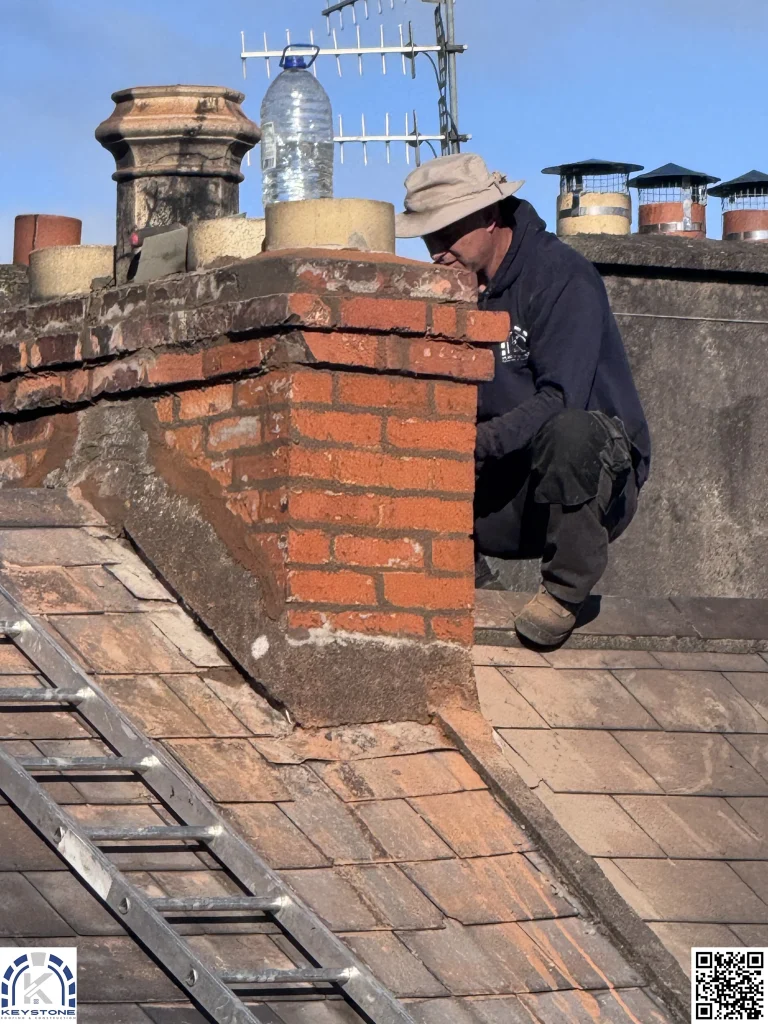
"My ceiling is wet near the chimney breast" is one of the most common emergency calls we get in Cork. Chimney leaks look like roof leaks, plumbing leaks or condensation problems — and people spend money fixing the wrong thing. This guide walks through how we diagnose chimney leaks, the four most common causes in Cork houses, and what each fix typically costs in 1970. For full chimney repair service details, see our service page.
In short: a damp patch near a Cork chimney breast is almost always one of four things — failed lead flashing (around 65% of cases), a cracked crown, eroded pointing, or flue condensation. Correlate it with rain and its exact location to narrow the cause, then confirm with a drone-and-thermal survey before paying for any repair. For the money side see our Cork chimney repair costs, and if water is actively coming in, work through the Cork roof-leak action plan first.
Why chimneys leak more than the rest of the roof
A chimney is the worst possible thing to put in a roof from a waterproofing perspective. It's a vertical penetration through the weatherproof skin, surrounded by lead flashing that has to bend, expand, contract and stay watertight for decades. The flashing is usually the first thing to fail. The crown (top of the chimney) is the second. The pointing in the brickwork is the third. The flue liner condensation issue is the fourth — and the trickiest to diagnose because it's not technically a leak.
How to tell which problem you have
Test 1: Does it correlate with rain?
If the wet patch only appears during or shortly after rain, the cause is almost certainly external water entry — flashing, crown, or pointing. If the wet patch appears in dry, cold weather, the cause is condensation inside the flue from a poorly-lined chimney serving a high-efficiency stove or boiler.
Test 2: Where exactly is the wet patch?
Wet at the top of the chimney breast (near the ceiling): usually flashing failure. Wet on the chimney breast in the room below: usually pointing failure or condensation. Wet at the floor of an attic immediately around the chimney: almost always flashing or lead-soaker failure.
Test 3: Is the chimney still in use?
An unused chimney that was capped without a vent is a textbook condensation trap. Sealing the top without ventilation lets warm humid air rise from the room, hit cold flue walls, and condense inside the chimney structure. Symptoms: damp staining several months after the cap was added, especially in winter.
The four common causes in Cork chimneys
1. Failed lead flashing or lead soakers (most common)
Around 65% of chimney leak callouts in Cork end up here. Lead flashing — the metal sheet bent down from the chimney brickwork onto the surrounding roof — typically lasts 30–50 years before the lead crystallises, splits or pulls away from its mortar bed. On 1970s–80s estate houses we frequently see lead that's been in place for 35–45 years and is now at end of life.
Repair cost in Cork (1970): €350–€650 for a single chimney with new front, back, side and step flashings in code 4 or code 5 lead, including new mortar bed and access. €800–€1,400 for full chimney re-flashing on a difficult-access chimney (rear elevation, high pitch, scaffolding required). See our chimney flashing service page for the full lead-specification process.
2. Cracked or missing chimney crown
The chimney crown is the concrete or mortar slab at the top, sloping outwards from the flue. Hairline cracks in the crown let rain straight into the flue and brickwork. About 20% of our chimney leak callouts are crown failures — easy to miss from ground level but obvious with drone inspection.
Repair cost in Cork (1970): €200–€400 for a crack repair with flexible mortar; €450–€850 for a complete crown rebuild. Add scaffolding if the chimney is on a difficult elevation.
3. Failed pointing on the chimney brickwork
Mortar joints between bricks weather and erode over time. Once the pointing recedes more than 5–10mm, water gets behind the bricks, runs down inside the chimney structure, and shows up as damp patches inside the room. Common on Cork chimneys exposed to driven rain off the Atlantic — Crosshaven, Cobh, Kinsale, parts of Cork Harbour see this earlier than inland properties.
Repair cost in Cork (1970): €350–€750 for re-pointing a typical chimney stack, dependent on access and the height of the stack above the roof line.
4. Condensation in unused / poorly-lined chimneys
About 10% of "chimney leak" callouts turn out to be condensation, not external water. The chimney was capped solid, or the room contains a high-efficiency boiler or stove venting into an unlined flue, and condensate runs down inside the chimney walls. The fix isn't waterproofing — it's ventilation and lining.
Repair cost in Cork (1970): €100–€250 for installing a vented cap; €600–€1,800 for installing a flexible flue liner. The diagnostic step (drone + thermal imaging) is what unlocks the right fix.
Not sure which chimney problem you have?
Book a free Keystone diagnostic inspection — we use drone and thermal imaging to identify the root cause before quoting any chimney repair work, so you don’t pay to fix the wrong thing.
See Chimney Repairs CorkThings not to do
- Don't apply silicone sealant around the flashing. It looks like a fix; it traps water and accelerates the underlying lead failure.
- Don't seal a chimney solid without venting. You'll create a damp problem inside the room within 6 months.
- Don't ignore minor wet patches. Chimney leaks that look small at the top of a chimney breast often correspond to substantial water ingress in the attic and roof timber, which is hidden.
- Don't accept a quote that doesn't itemise lead grade. "Re-flash chimney" is meaningless. The quote should specify code 4 or code 5 lead, mortar grade, and what work is being done to the brickwork.
When repair turns into chimney removal or replacement
If the chimney is no longer used and the cost of repointing + re-flashing + new crown exceeds €2,500, it's often more practical to remove the chimney down to roof level and tile over it. This is a one-day job for €1,800–€3,200 in Cork (1970) and eliminates the recurring maintenance liability. Confirm planning permission first if your house is in a conservation area.
How we diagnose a Cork chimney leak step-by-step
The reason chimney leaks get misdiagnosed so often is that the four causes look similar from inside the house. Here's the diagnosis process Keystone uses on every chimney leak callout:
- Internal photograph and timeline. Where exactly is the wet patch? When did it first appear? Does it come and go with rain, or stay damp permanently? This narrows the cause within minutes.
- Attic inspection. Open the attic hatch, photograph the chimney structure inside the attic, look for water tracking down the brick, soaked insulation around the base, or daylight visible at flashing points.
- Drone inspection of the external chimney. 360° photography of crown, flashing, pointing and the surrounding tile detail. Drones see what ladders can't, and the documentation goes into your file regardless of whether you proceed with repair.
- Thermal imaging in dry conditions. Cold spots on the chimney structure indicate water saturation inside the brickwork. This catches condensation problems and pointing failure that aren't always obvious from photos.
- Hose test (if needed). For ambiguous cases, a controlled hose test on specific sections of the chimney isolates exactly where water enters. This is a last-resort diagnostic — most leaks are clear from steps 1–4.
- Written diagnosis and quote. You receive a written diagnostic report with photos, the identified cause, the proposed fix, the cost range, and the warranty terms. Free with every callout.
Preventing chimney leaks before they start
Chimney maintenance is dramatically cheaper than chimney repair. Three things that extend the life of every Cork chimney:
- Annual visual inspection (free with our roof maintenance plans). Catches lifted flashing, weathered pointing and crown cracks before they leak.
- Re-pointing every 25–30 years. Cheap preventive work that adds 20+ years to the chimney structure.
- Vent the chimney if you cap it. Sealing solid is the leading cause of "phantom leaks" that turn out to be condensation.
For broader roof health, our Cork roof maintenance plans include the chimney inspection at no extra cost. And for the full picture on repair costs, warning signs and how to vet a roofer, see our Cork roof repairs guide.
Cork chimney leak? Free diagnostic inspection.
Drone, thermal imaging and written report — we identify the root cause before quoting any work, so you don't pay to fix the wrong thing. 20-year workmanship guarantee on every chimney repair.
Book a Free Chimney DiagnosticChimney Leak Diagnosis Cork — FAQs
01Can I tell from inside the house which type of chimney leak I have?
Partially. Wet at the top of the chimney breast near the ceiling is usually flashing failure. Wet at floor level around the chimney in the attic is almost always flashing or lead-soaker failure. Damp staining several months after the chimney was capped is condensation. Wet patches that appear only in heavy driving rain (not normal rain) are usually pointing failure on the prevailing-wind side.
02How urgent is a chimney leak repair?
More urgent than people think. Water tracking inside chimney structure rots roof timber, soaks insulation, and stains plasterboard within days. The cost of repair doubles if you wait through a full winter season.
03Is a chimney leak covered by home insurance?
If the cause is sudden storm damage (e.g. lifted flashing in a named storm), often yes. If the cause is gradual wear and tear (40-year-old lead), no — that’s classed as maintenance.

Michael Casey, Founder & Master Roofer
Michael Casey is the founder of Keystone Roofing and Construction. He has been on Cork roofs since 2000 and has completed 500+ roofing projects across County Cork and Tipperary.
Keystone Roofing and Construction - CRO Business Name No. 752205 - Fully insured (AXA Policy 12/28/150946921)
More Keystone roofing guides
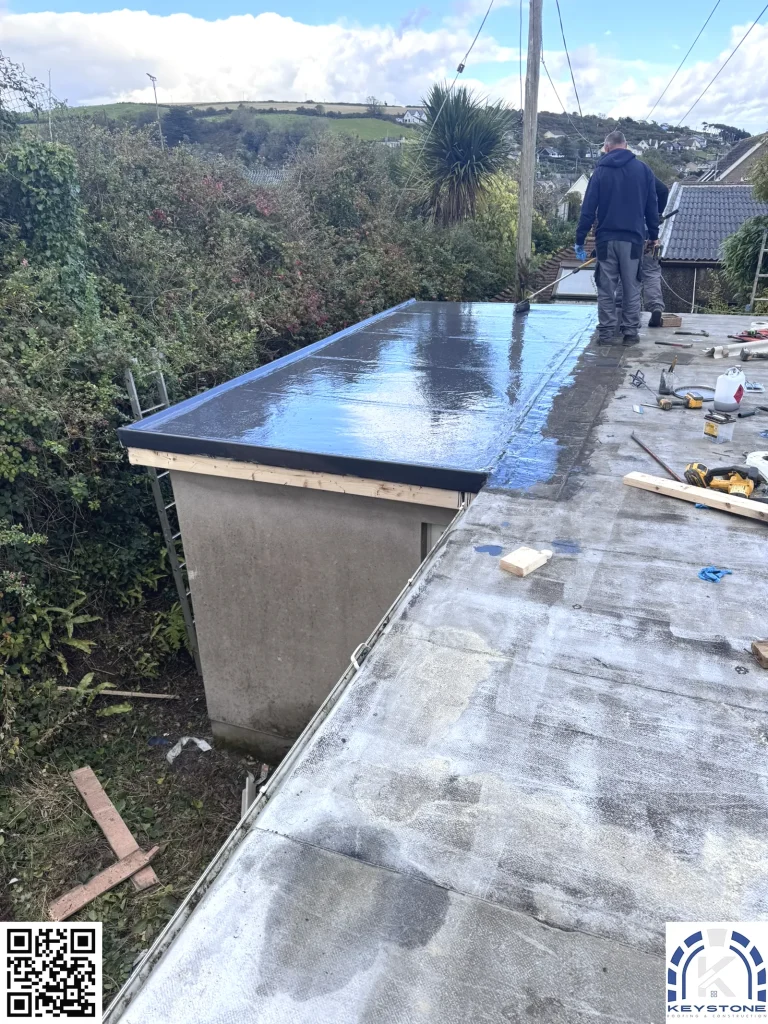
Roof Leaking in Cork - Action Plan
Active leak in your Cork home right now? A 6-step plan for the first 60 minutes - safety, containment, documentation, when to call an emergency roofer, and typical Cork callout costs.
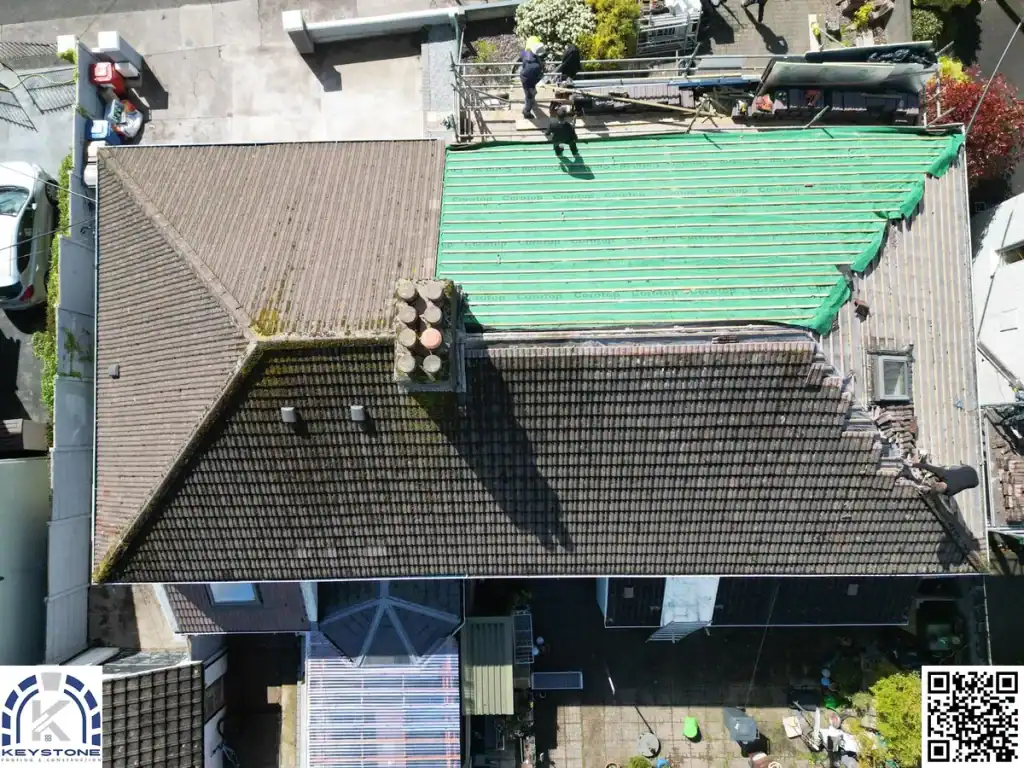
Storm Damage Roof Insurance Claims Ireland
How Irish home insurance covers storm damage to your roof in 1970 - step-by-step claim process, the documentation your insurer wants, common refusal reasons, and the named storms that have hit Irish roofs recently.