
Maintenance
How Long Does a Roof Last in Ireland? Lifespans by Material
Typical roof lifespans in Ireland's wet, windy climate — from 80–100+ year natural slate to 10–20 year felt flat roofs — plus what shortens a roof's life and how to know when to replace.
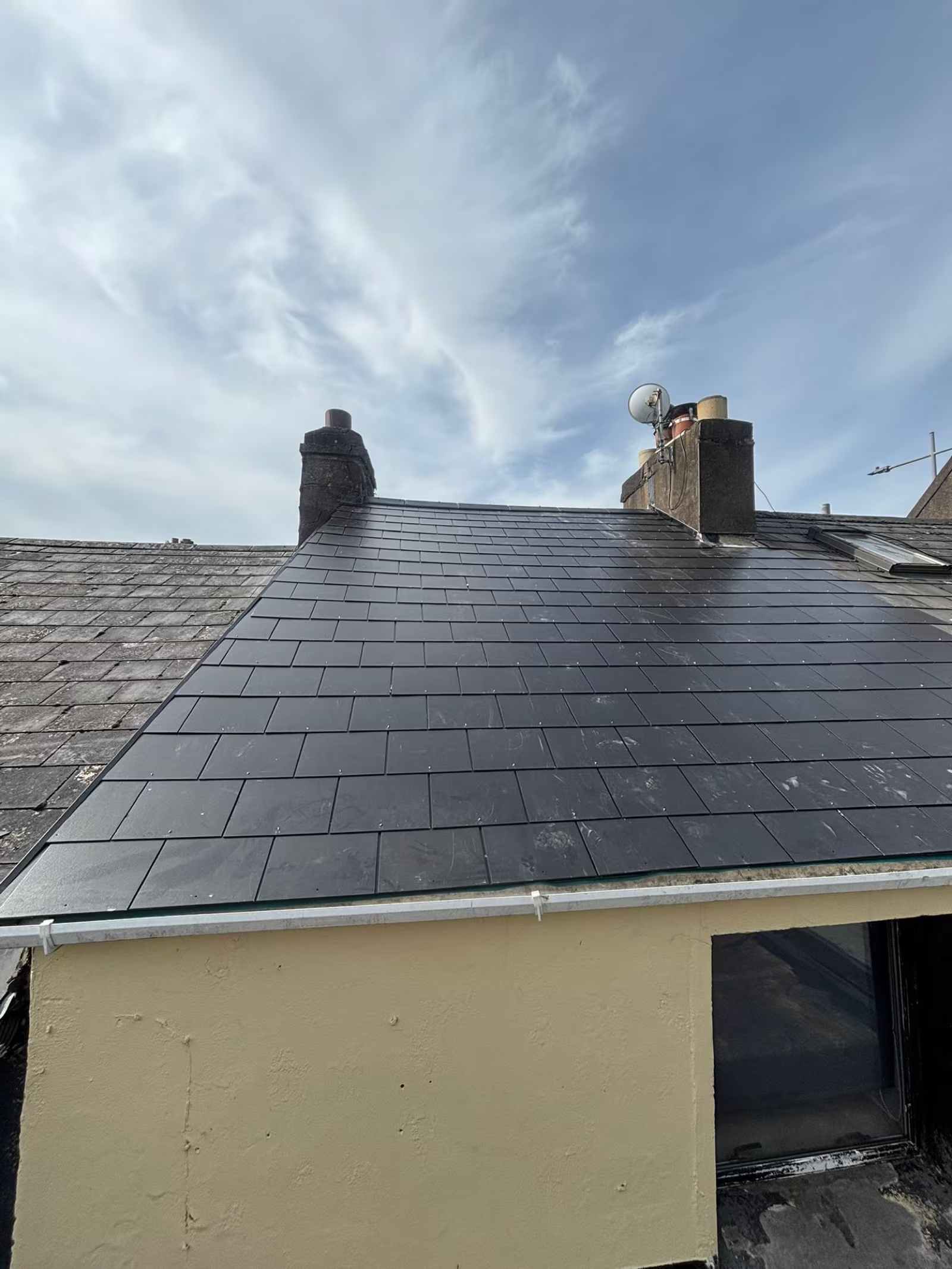
I'm Michael Casey, founder of Keystone Roofing. I've been on Cork roofs since 2000, and "how long will this last?" is the question I get on almost every quote. The honest answer depends on the material, the fixings underneath, the ventilation, and how much Atlantic weather the roof takes — a slate roof in a sheltered Douglas cul-de-sac ages very differently to the same slate on an exposed hill above Kinsale.
In short: In Ireland's wet, windy climate a natural slate roof typically lasts 80-100+ years, clay tile 60-100, concrete tile and fibre-cement slate 40-60, and lead 100+. Flat roofs are shorter: felt 10-20 years, GRP fibreglass 25-30, EPDM rubber 30-50. Ventilation, fixings and maintenance decide where in that range you land.
How long does each roof material last in Ireland?
The figures below are typical service-life ranges I'd quote a Cork homeowner — real spans I've seen come off roofs across the county. They assume the roof was fitted properly and got at least occasional maintenance. Skip the maintenance, or fit it cheap, and you sit at the bottom of every range.
| Material | Typical lifespan | Notes |
|---|---|---|
| Natural slate (Welsh/Spanish) | 80-100+ years | The slate outlasts the fixings; nail fatigue usually triggers re-roofing first. |
| Fibre-cement slate | 40-60 years | Common on 1990s-2000s Cork estates; can delaminate and grow moss with age. |
| Clay tile | 60-100 years | Colour and frost resistance hold up well; individual tiles can crack in storms. |
| Concrete interlocking tile | 40-60 years | The default on modern Irish housing; surface erodes and colour fades over time. |
| Lead (flashing/valleys) | 100+ years | Code-appropriate lead lasts generations; failure is usually poor detailing, not age. |
| Felt (built-up) flat roof | 10-20 years | Cheapest flat option; blisters, cracks and ponding shorten it fast in wet weather. |
| EPDM rubber (flat) | 30-50 years | Single-membrane, few seams; the best-value modern flat roof for Irish conditions. |
| Fibreglass / GRP (flat) | 25-30 years | Seamless and hard-wearing; quality depends heavily on the installer's laminate work. |
| Zinc (standing seam) | 60-80 years | Premium, low-maintenance; increasingly used on contemporary Cork extensions. |
Pitched roofs age from the fixings up
Here's the part most people miss: on a slate or tile roof, the covering usually outlives everything holding it on. Nails corrode, the sarking felt (underlay) perishes after 25-35 years, and battens rot where ventilation is poor. I've stripped 90-year-old Welsh slate that was still perfect and re-laid it on new felt and battens — the slate had another lifetime left. If you want the full material comparison, our slate vs concrete tile guide breaks down the cost-versus-lifespan trade-off in detail.
What shortens a roof's life in Ireland?
Ireland is one of the harder climates in Europe for roofs. It's not the cold that does the damage — it's the relentless wet, the wind-driven rain off the Atlantic, and the freeze-thaw cycles. Along the M28/N28 corridor down to Ringaskiddy and out the N71 towards West Cork, roofs simply weather faster than the same house would inland. Housing stock era matters too: Cork's Victorian and Edwardian terraces were built for natural slate on timber, while 1970s-2000s estates lean on concrete tile and fibre-cement — each ages on its own clock.
- Atlantic exposure. Wind-driven rain forces water uphill under slates, and gales like Storm Eowyn strip fixings that a sheltered roof would never lose. Exposed coastal and hilltop roofs sit years below the typical range.
- Poor ventilation and condensation. A warm, unventilated attic sweats. That moisture rots battens, corrodes nails and soaks insulation from below — killing a roof from the inside while it looks fine from the road. Fixing airflow is one of the cheapest ways to extend a roof's life.
- Moss and organic growth. Our damp, shaded north-facing slopes grow moss readily. Moss holds water against the surface, lifts slate edges, blocks gutters and speeds up frost damage.
- Failed flashing. Cracked or lifted lead around chimneys and valleys lets water into the structure long before the slates themselves wear out. Flashing is the single most common failure I diagnose.
- Cheap fixings. Non-stainless nails and clips rust out in Cork's salty, wet air, dropping perfectly good slates in the next storm. The covering fails because of a few euro saved underneath it.
- Lack of maintenance. A slipped slate or blocked gutter left for a winter turns a €200 job into rotted timber and a re-roof conversation.
How do you know your roof is near the end of its life?
You don't need to climb up to spot the warning signs. From the ground, or from your attic, watch for:
- Multiple slipped, cracked or missing slates — especially if repairs are becoming a yearly event.
- Widespread moss, or slates that look flaky and delaminated (common on ageing fibre-cement).
- Sagging or dipping in the roof line, which points to rotted battens or rafters.
- Daylight through the roof when you look up in the attic, or damp, blackened timber.
- Underlay you can see through gaps that is torn, sagging or crumbling to the touch.
- Recurring leaks in different spots — a sign the whole covering, not one detail, is past it.
- Granules or debris collecting in the gutters from eroding tile or felt surfaces.
If you're seeing several of these, a roof replacement is worth pricing before another winter. The honest way to know for certain is a proper survey — our roof replacement team uses drone and close-up inspection so you see the actual condition of the fixings and underlay, not just a guess from the driveway.
Repair or replace — how do you decide?
The rule of thumb I give Cork homeowners: repair when the problem is localised and the roof still has years left; replace when the fixings and underlay have gone, because you'll be paying for scaffolding again and again otherwise.
- Repair makes sense when you have a handful of slipped slates, one failed flashing, or a single valley to sort, and the rest of the roof is sound. A targeted fix protects a roof that's mid-life.
- Replace makes sense when the underlay has perished, nails are failing across the roof (nail fatigue), or repairs are recurring. At that point every repair is money spent on borrowed time, and the scaffolding cost alone argues for doing it once, properly.
A useful test: if the cost of repairs over the next five years would approach a third or more of a full re-roof, replacement is usually the better value — and it resets the clock with a 20-year workmanship guarantee. See our 2026 Cork roof cost guide for current typical ex-VAT ranges by material.
What extends a roof's life?
Most of the roofs I strip early could have lasted a decade or two longer with basic care. The cheap wins:
- Annual visual check and gutter clearing. Catching a slipped slate or blocked gutter early stops water reaching the timber.
- Moss control. Keeping slopes clear of moss protects the surface and keeps gutters flowing — a scheduled part of roof maintenance.
- Proper ventilation. Ridge and eaves vents keep the roof dry from the inside, which is where most premature failure actually starts.
- Fixing flashing promptly. A €650-€1,400 chimney flashing repair (ex-VAT) protects a whole roof's worth of timber.
- Stainless or copper fixings. On any new work, insist on corrosion-proof nails and clips — they're the difference between the top and bottom of every lifespan range above.
Keystone Roofing has worked Cork roofs since 2009 (CRO 752205), carrying €6.5M AXA public liability and backing every job with a 20-year workmanship guarantee. If you want a straight answer on how many years your roof has left, we'll tell you honestly — a repair when a repair will do, a replacement only when it genuinely earns it.
Not sure how long your roof has left?
Book a proper inspection and we'll give you an honest, written assessment of your roof's condition and remaining life — repair or replace, no pressure. Call 087 223 4228 or get in touch.
See Roof Replacement CorkHow Long Does a Roof Last in Ireland? — FAQs
01What is the longest-lasting roof material in Ireland?
Natural slate and lead are the longest-lasting, at 80-100+ years and 100+ years respectively. In practice, a slate roof's fixings and underlay (25-35 year life) usually need renewing before the slate itself wears out, so a re-lay can extend it even further.
02How long does a flat roof last in Ireland?
It depends on the system. Traditional built-up felt lasts 10-20 years, GRP fibreglass 25-30 years, and EPDM rubber membrane 30-50 years. For Irish conditions I usually recommend EPDM or GRP over felt — the higher upfront cost pays back in far fewer replacements.
03Why do roofs wear out faster in Cork than elsewhere?
Cork gets heavy Atlantic exposure — wind-driven rain, salt-laden air and frequent gales. That forces water under slates, corrodes cheap fixings and strips storm-loosened slates. Coastal and hilltop roofs typically sit years below the average lifespan of the same roof fitted inland.
04Should I repair or replace my roof?
Repair when the problem is localised — a few slipped slates or one failed flashing — and the rest of the roof is sound. Replace when the underlay has perished or nails are failing across the whole roof, because recurring repairs plus repeated scaffolding cost more than doing it once properly.
05Can I make my roof last longer?
Yes, significantly. Annual gutter clearing, moss control, prompt flashing repairs, good attic ventilation and stainless fixings can add 10-20 years to a roof's life. Most roofs replaced early failed from neglect or poor ventilation, not because the material was worn out.
06How can I tell my roof is near the end of its life?
Warning signs include recurring leaks in different spots, widespread slipped or delaminating slates, a sagging roof line, daylight or damp timber visible in the attic, and torn or crumbling underlay. If several of these appear together, price a replacement before the next winter.
Michael Casey, Founder & Master Roofer
Michael Casey is the founder of Keystone Roofing and Construction. He has been on Cork roofs since 2000 and has completed 500+ roofing projects across County Cork and Tipperary.
Keystone Roofing and Construction - CRO Business Name No. 752205 - Fully insured (AXA Policy 12/28/150946921)
More Keystone roofing guides
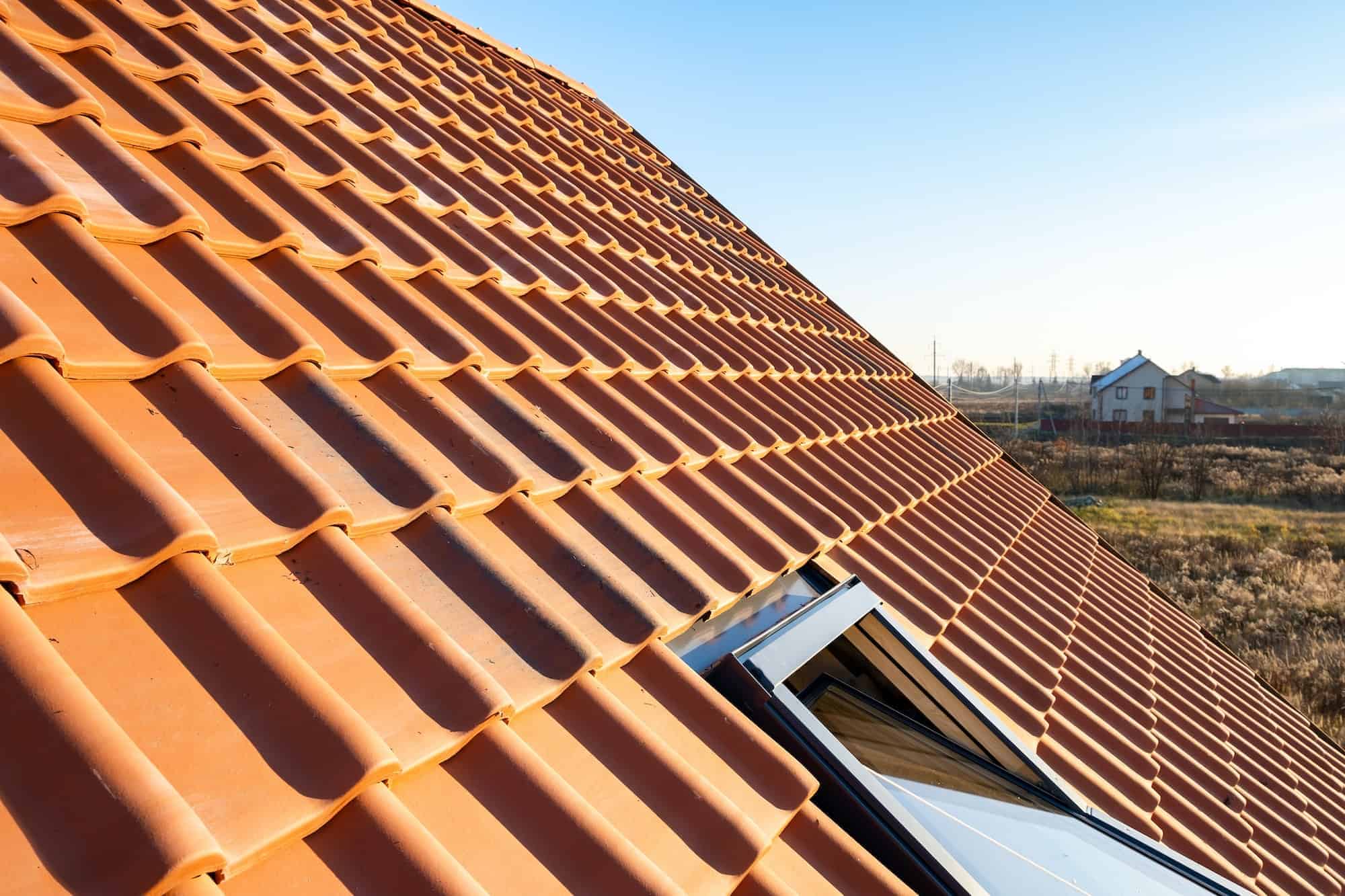
Slate vs Concrete Tile Roof Ireland
A practical Cork-specific guide to choosing between slate and concrete tile - real 1970 prices per square metre, weight implications, lifespan, maintenance trade-offs and which material suits which type of Cork house.
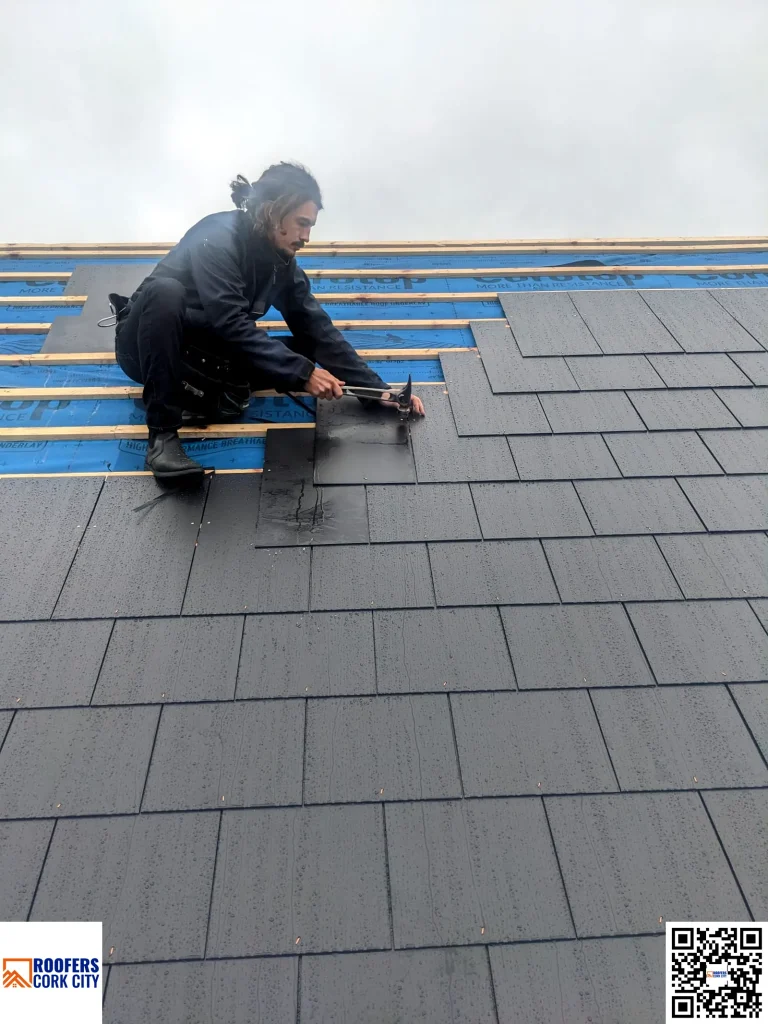
Roof Replacement Cost in Ireland 1970
What a new roof actually costs in Ireland in 1970 - per-square-metre prices for slate, concrete tile, EPDM, fibreglass and felt, plus scaffolding, waste and the hidden extras most homeowners forget (all ex-VAT).