
Guides
EPDM vs Fibreglass vs Felt: Which Flat Roof Is Right for Your Cork Home?
EPDM rubber, fibreglass (GRP) or 3-layer felt? A Cork roofer compares lifespan, joins, foot traffic and winter weather to help you pick the right flat roof.

I'm Michael Casey, founder of Keystone Roofing. Most flat roofs I'm called to in Cork are on kitchen extensions, garages and dormers built in the last thirty years, and the first question is nearly always the same: “Should I go with rubber, fibreglass or felt?” There's no single right answer. The right system depends on the shape of the roof, how often you walk on it, what it joins onto, and how long you plan to stay in the house.
This guide compares the three systems we fit across Cork City and County, EPDM rubber, fibreglass (GRP) and 3-layer torch-on felt, on the things that actually decide how a flat roof performs here: joins, edge detailing, foot traffic and wet weather. For prices per square metre, see our separate flat roof cost guide for Cork.
For most Cork extensions and garages, EPDM rubber is the safest all-round choice: few joins, flexible in cold weather and quick to fit in a dry window. Fibreglass (GRP) suits roofs with foot traffic, many rooflights or awkward shapes because it cures into one seamless, hard skin. Felt is the cheapest up front but has the shortest life, so it only makes sense on a tight budget or a short stay.
EPDM vs fibreglass vs felt: how do they compare?
All three can give a watertight flat roof if the deck underneath is sound and the falls are right. The differences show up in lifespan, how they handle joins and edges, and how well they cope with people walking on them. These are the figures we work to on Cork jobs in 2026:
| EPDM rubber | Fibreglass (GRP) | 3-layer felt | |
|---|---|---|---|
| Typical lifespan | 20–30 years | 25–30 years | 10–15 years |
| Cost per sqm (ex-VAT) | €90–€140 | €110–€170 | €55–€90 |
| Joins | Very few (large single sheets) | None (cured as one skin) | Many overlaps |
| Foot traffic | Light only | Good | Poor |
| Weather needed to fit | Dry deck | Dry and above curing temperature | Dry deck; uses a torch |
| Best for | Extensions, dormers, garages | Balconies, roofs with rooflights, complex shapes | Sheds, tight budgets, short stays |
When is EPDM rubber the right choice?
EPDM is our default recommendation for a standard Cork extension or garage. It comes in large sheets, so most domestic roofs go down with no seams at all, and the fewer joins a flat roof has, the fewer places it can leak. It stays flexible in cold weather, so it copes well with the freeze–thaw cycles and long wet spells we get through a Cork winter.
Where EPDM is less suited: roofs you walk on regularly, because it's a membrane rather than a hard surface, and very fiddly roofs with lots of penetrations, where the detailing takes longer. For a straightforward rectangle over a kitchen or garage, it's hard to beat on value over its lifetime.

When is fibreglass (GRP) the better option?
Fibreglass is laid as resin and matting that cures into one continuous hard skin, with moulded trims at the edges. That makes it the strongest choice where people will walk on the roof (a balcony or a roof terrace you reach from a window) and where the roof has several rooflights, soil pipes or awkward corners. With no seams to fail, a well-laid GRP roof is very durable.
The trade-off is weather. Resin needs a dry deck and a reasonable temperature to cure properly, so in a Cork winter the installation window is narrower and a good contractor will wait rather than lay it in the damp. If you want a fibreglass roof, plan it for spring to early autumn where you can. See our fibreglass roofing service in Cork for how we approach it.
Is felt still worth fitting in 2026?
Modern 3-layer torch-on felt is a long way ahead of the single-layer felt on many older Cork garages, but it still has the most joins and the shortest lifespan of the three. It makes sense when the budget is tight, the building is a shed or outbuilding, or you expect to sell within a few years. If you're staying long-term, re-felting every 10–15 years usually works out dearer than fitting EPDM or fibreglass once.
Should you repair your existing flat roof or replace it?
Before choosing a new system, check whether you need one. A single split, a lifted seam or a failed upstand where the roof meets the house wall can usually be repaired for a fraction of the cost of a new roof. Signs that it's time to re-cover rather than patch:
- water ponding in the same spots for days after rain (the falls have gone)
- multiple blisters, splits or cracked areas across the whole roof
- a soft or spongy feel underfoot, which usually means the deck boards have rotted
- repeated leaks in different places, winter after winter
A soft deck is the big one: no covering will last on rotten boards, so they have to be replaced first. We check this on every flat roof repair in Cork before quoting, and if access is awkward a drone roof inspection shows the whole surface without anyone walking on it.
What matters most for a flat roof in Cork's weather?
Whichever system you pick, three details decide whether it survives our wet, windy climate:
- Falls. Water must run off to a gutter or outlet, not sit on the roof. Ponding shortens the life of every system.
- Upstands and edges. Most flat roof leaks we see start where the roof meets a wall, a rooflight or the edge trim, not in the middle of the roof. If the roof meets a pitched roof or a chimney, the lead flashing at that junction needs checking too.
- Outlets and gutters. A blocked outlet turns a flat roof into a paddling pool. Keep them clear, especially after autumn leaf fall.
Rooflights deserve a mention: they're one of the most common leak points on extensions. If you're replacing the roof anyway, it's the right time to replace or reseal them too. See our skylight and rooflight installation page.
Not sure which flat roof system suits your extension?
We'll inspect the deck, falls and edges and recommend EPDM, fibreglass or felt in writing, with a fixed ex-VAT quote and a 20-year workmanship guarantee. Call 087 223 4228 or get in touch.
See Flat Roof Repairs CorkEPDM vs Fibreglass vs Felt Flat Roofs — FAQs
01Which is better for a flat roof, EPDM or fibreglass?
For a standard extension or garage roof, EPDM is usually the better value: large single sheets with very few joins, flexible in cold weather and quicker to fit in a dry spell. Fibreglass is better where the roof gets foot traffic, has several rooflights or an awkward shape, because it cures into one seamless hard skin.
02How long does a flat roof last in Ireland?
On Cork jobs we work to 20–30 years for EPDM, 25–30 years for fibreglass (GRP) and 10–15 years for 3-layer torch-on felt, assuming a sound deck and correct falls. Ponding water shortens the life of every system.
03Can a fibreglass flat roof be laid in winter?
Only in dry weather above the resin’s curing temperature. In a Cork winter that window is narrow, so a careful contractor will wait for suitable conditions rather than lay it in the damp. Spring to early autumn is the best time for fibreglass.
04Should I repair or replace my flat roof?
Repair a single split, lifted seam or failed upstand. Re-cover the roof if water ponds for days, there are blisters or splits across the whole surface, the deck feels soft underfoot, or it leaks in different places every winter.
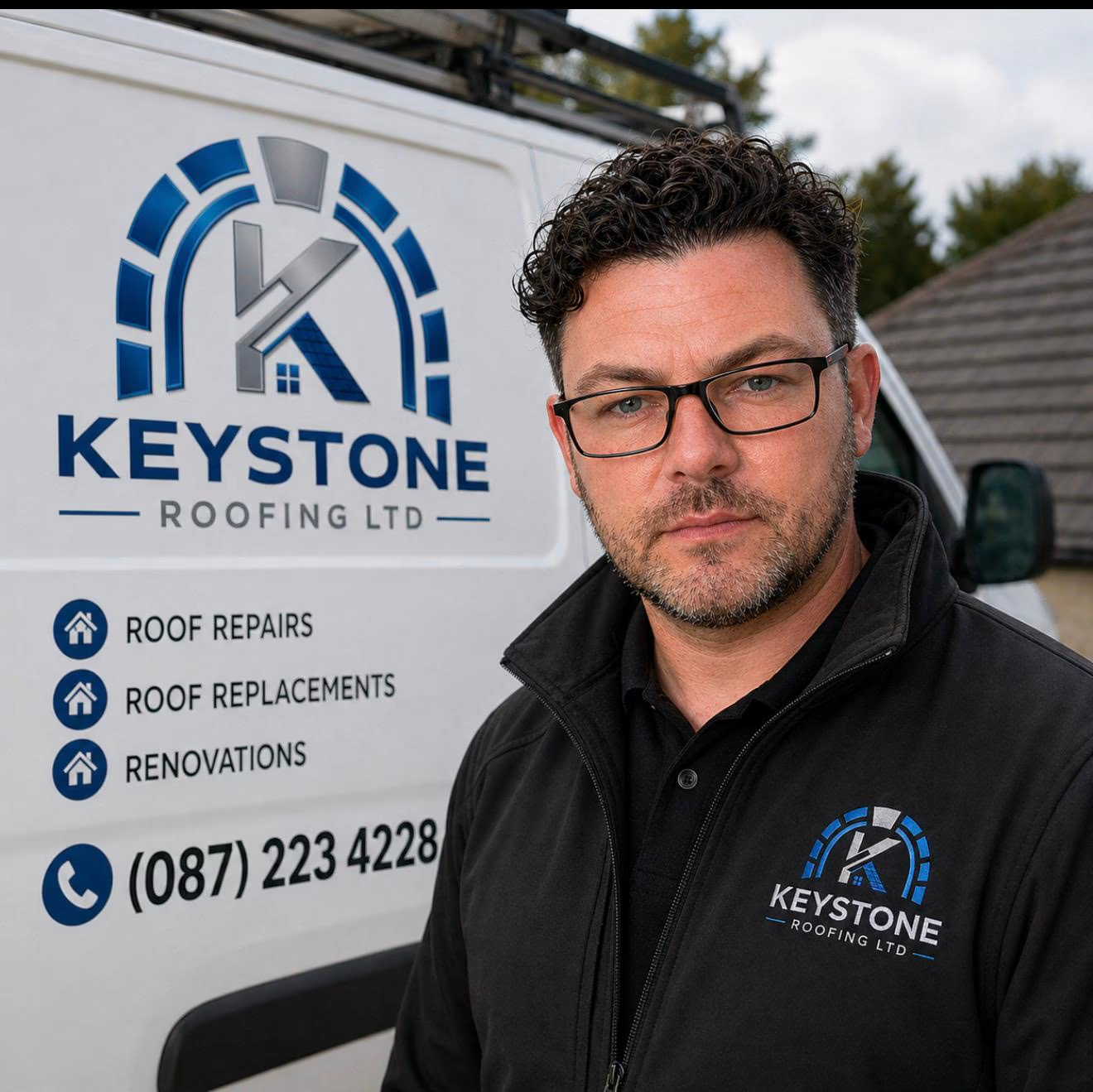
Michael Casey, Founder & Master Roofer
Michael Casey is the founder of Keystone Roofing and Construction. He has been on Cork roofs since 2000 and has completed 500+ roofing projects across County Cork and Tipperary.
Keystone Roofing and Construction - CRO Business Name No. 752205 - Fully insured (AXA Policy 12/28/150946921)
More Keystone roofing guides
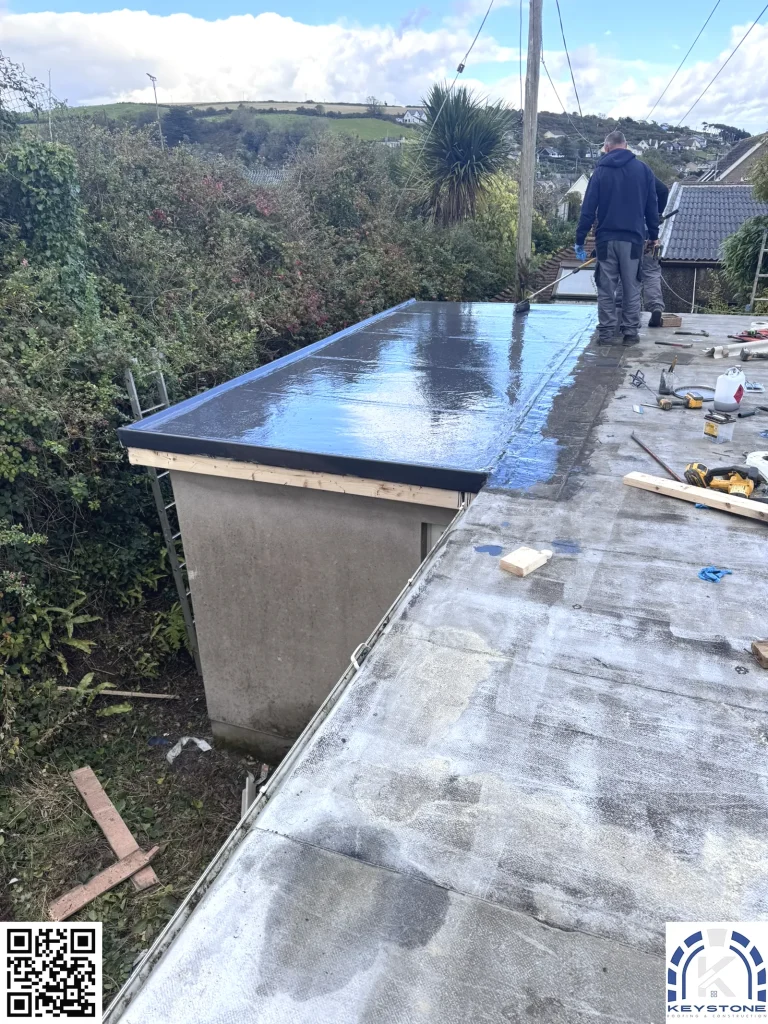
Flat Roof Cost in Cork 2026
What a flat roof costs in Cork in 2026 — real ex-VAT prices per square metre for EPDM, fibreglass and felt, what drives the price, and repair-vs-replace.
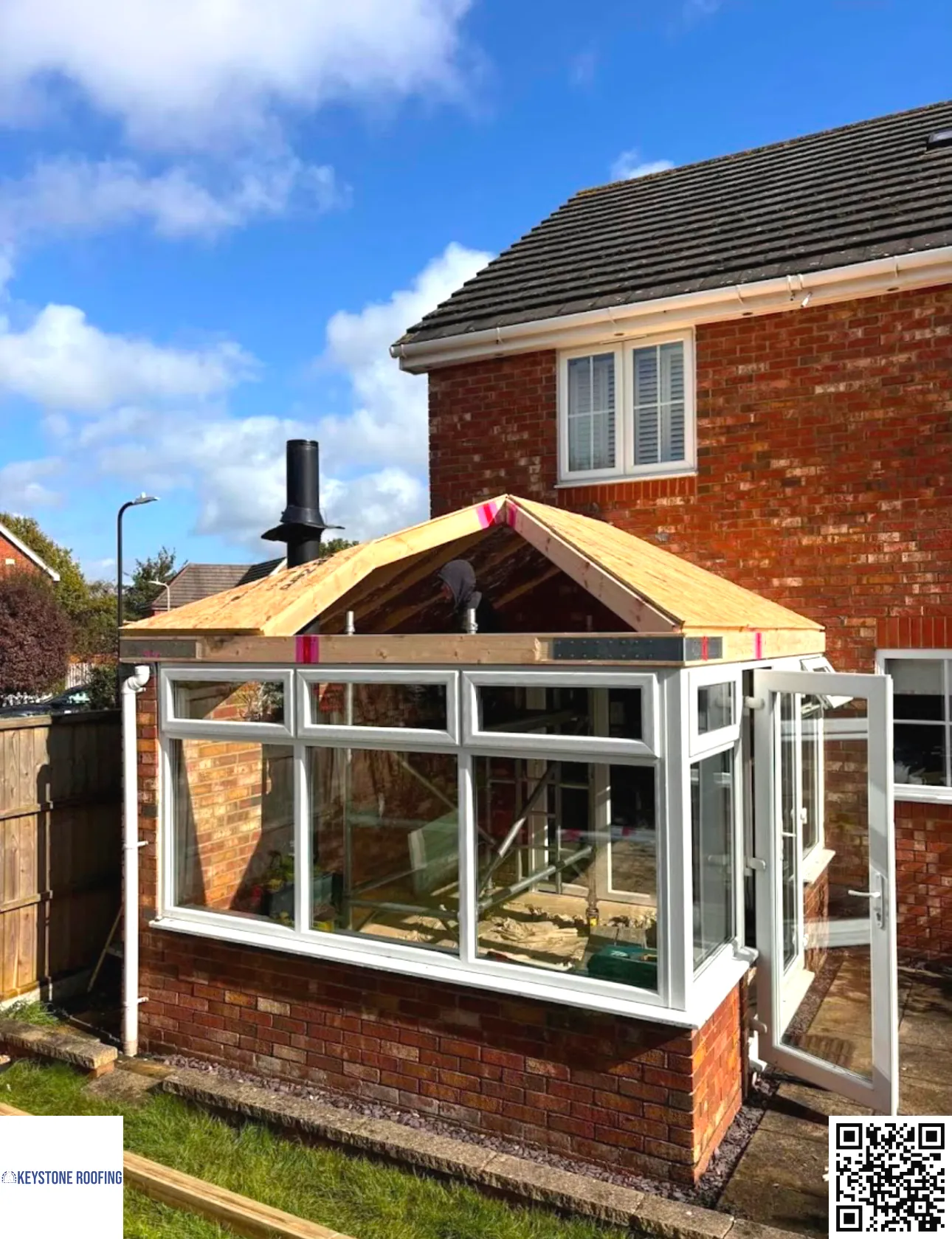
Conservatory Roof Replacement Cost Cork 1970
What replacing a conservatory roof costs in Cork in 1970 — polycarbonate, glass and solid insulated conversion prices by size, the frame load check that matters, and planning rules.