Common Gutter Problems We Repair
Gutters fail in predictable ways. Understanding what goes wrong helps you identify problems early and explains what repair involves. Here are the gutter problems we fix most frequently across Cork.
Leaking Gutter Joints
The joints between gutter sections are the most common failure point. Gutters are sold in standard lengths — typically 2 or 4 metres — joined together with union connectors. These joints rely on rubber seals or sealant to remain watertight. Over time, seals degrade, sealant dries out, and movement works connections loose.
A leaking joint appears as water dripping from the gutter at a specific point rather than overflowing along its length. You might notice a line of water dripping in the same spot during every rain shower, or see staining on the wall directly below the joint.
What causes joint leaks:
Age and weathering degrade rubber seals and sealant compounds over years of exposure. Even quality seals have finite lifespans.
Thermal movement causes gutter sections to expand and contract with temperature changes. This cyclical movement works joints loose over time, especially on south-facing elevations with greater temperature variation.
Settlement and building movement can stress gutter joints. As buildings settle slightly over years, gutters fixed rigidly to fascias experience stress at connection points.
Blocked gutters cause water to sit against joints rather than flowing through. Standing water accelerates seal degradation and increases the chance of leaks.
How we repair joint leaks:
For standard PVC gutters, we remove the affected section, clean old sealant from joint surfaces, and reassemble with fresh gutter sealant. The repair is quick but must be done properly — rushing leaves gaps that leak again within months.
For older gutter systems with degraded connectors, we replace the union fitting entirely rather than attempting to reseal a failing component.
For cast iron gutters with putty joints, we remove old putty completely, clean mating surfaces to bare metal, and re-joint using appropriate modern sealant that accommodates movement.
Sagging Gutters
Gutters should run straight and level, or with slight fall toward downpipe outlets. Sagging sections hold standing water, look unsightly, add strain to brackets and fascias, and eventually overflow at the sag point rather than draining properly.
Sagging appears as a visible dip in the gutter line when viewed from ground level. After rain, you might notice water sitting in the sagged section long after it should have drained. In severe cases, sagged sections pull away from fascias entirely.
What causes sagging:
Failed brackets are the primary cause. Gutter brackets support gutter sections at intervals along their length. When brackets break, corrode, or pull out of fascia boards, the gutter section between remaining brackets sags under its own weight and any debris or water load.
Rotten fascia boards cannot hold bracket fixings securely. Screws pull through soft timber, brackets work loose, and gutters sag. The underlying fascia problem must be addressed alongside the gutter repair.
Debris and water weight accelerates sagging once it begins. Gutters full of wet leaves and standing water are significantly heavier than empty gutters. This additional weight increases stress on already compromised brackets.
Ice in winter adds extreme weight. Water frozen in gutters expands and becomes much heavier than liquid water. Marginal brackets that cope in summer fail under winter ice loads.
Incorrect original installation sometimes causes sagging. If brackets were spaced too far apart or fixed inadequately, gradual sagging was inevitable from the start.
How we repair sagging gutters:
First, we identify why the sagging occurred. Rehanging a sagging section without addressing the underlying cause means it will sag again.
If brackets have failed, we install new brackets at appropriate spacing — typically every 600-800mm depending on gutter profile. We use brackets suitable for the gutter type and fascia material.
If fascia boards are soft or rotten, we assess the extent of damage. Localised soft spots can sometimes be addressed with longer fixings into sound timber behind. Significant rot requires fascia replacement before gutter repairs make sense.
We reset the gutter section to correct alignment with appropriate fall toward outlets. We check adjacent sections to ensure consistent gradient throughout.
Cracked and Damaged Gutters
Physical damage to gutter sections creates holes or cracks where water escapes. Damage ranges from small cracks causing minor drips to major breakage causing substantial water escape.
You might notice cracked gutters from ground level as visible breaks in the gutter profile. Water spraying or dripping through specific spots during rain confirms the location. Cracks may appear suddenly after impact or develop gradually from stress and age.
What causes gutter cracks and damage:
Ladder damage is extremely common. Ladders leaned against plastic gutters without proper protection crack and deform the gutter edge. We see this regularly — often from window cleaners or DIY work.
Impact from falling objects including branches, debris, and items dropped from above. Heavy snowfall sliding off roofs can hit and damage gutters.
Frost damage affects water-filled gutters in freezing conditions. Water expands as it freezes, cracking plastic gutters from within. Cast iron gutters are particularly vulnerable to frost cracking.
Age-related brittleness affects older PVC gutters. UV exposure degrades plastic over decades, making it brittle and prone to cracking under stress that newer gutters would tolerate.
Manufacturing defects occasionally cause premature failures. Poor quality gutters may crack at stress points within a few years of installation.
How we repair cracked gutters:
Small cracks in accessible locations can sometimes be patched using appropriate gutter repair tape or sealant. These repairs are quick and cheap but are suitable only for minor damage in good overall condition gutters. We are honest about when patching is appropriate and when it is not.
Larger cracks or damage in the main gutter channel generally require section replacement. We cut out the damaged section and fit a new length with union connectors. For standard profiles, we carry stock and can complete repairs same-day.
For unusual profiles, discontinued patterns, or period cast iron, sourcing matching sections may take longer. We advise on timescales when we assess the damage.
Overflowing Gutters
Gutters that overflow during rain — water pouring over the front edge rather than draining through outlets — indicate either blockage or capacity problems.
Overflow appears as sheets or streams of water cascading from gutter edges during rainfall. The effect may be consistent along the gutter length or concentrated in specific sections. Persistent overflow causes wall staining, fascia damage, and ground erosion below.
What causes overflow:
Blockages are the most common cause. Debris accumulated in gutters prevents water reaching outlets. Blocked downpipes prevent drainage even from clear gutters. Blocked outlets where gutters connect to downpipes cause water backup.
Insufficient capacity affects some properties. Gutters sized for normal rainfall cannot cope with modern intense downpours or with additional water from extensions, conservatories, or altered roof configurations.
Incorrect fall prevents drainage to outlets. Gutters that are level, or worse, falling away from outlets, cannot drain efficiently. Water accumulates until overflow occurs.
Damaged or missing sections create gaps where water escapes before reaching outlets.
How we repair overflow problems:
For blockage-related overflow, we clear gutters and downpipes completely, test flow, and confirm drainage is restored. We also identify why blockage occurred — tree debris, moss accumulation, or failed leaf guards — and advise on prevention.
For capacity problems, options include installing larger gutters, adding additional downpipe outlets to reduce run lengths, or installing overflow fittings that release excess water in controlled locations rather than random overflow points.
For fall problems, we adjust bracket positions to establish correct gradient toward outlets. This may require removing and refitting multiple brackets along affected runs.
Downpipe Problems
Downpipes carry water from gutters to ground-level drains. Problems with downpipes cause backup into gutters, water escape at joints, or failure to deliver water to drains properly.
Downpipe problems appear as water escaping at joints or connections, slow drainage from gutters, water pooling at downpipe bases, or disconnected sections visibly separated.
Common downpipe problems:
Blocked downpipes from debris accumulation at bends, connections, or shoe outlets. Leaves, moss, and sediment wash into downpipes and compact into solid blockages.
Cracked or damaged pipes from impact, frost, or age. Cracks may be visible or may only leak when water is flowing through.
Loose fixings allowing pipe movement and joint separation. Downpipe clips corrode, pull out of walls, or break, leaving pipes unsupported.
Disconnected sections at joints or at ground level. Pipes can separate at socket joints or detach from underground drain connections.
Corroded cast iron pipes on older properties. Cast iron downpipes rust through over decades, developing holes and eventually failing completely.
How we repair downpipes:
Blockages are cleared using drain rods, pressure equipment, or pipe-clearing tools depending on blockage location and severity. We clear from both top and bottom access points to ensure complete clearance.
Cracked plastic pipes are replaced section by section. Standard profiles are stocked; unusual sizes may require ordering.
Cast iron downpipes can be patched, sleeved internally, or replaced depending on damage extent. We can replace with cast iron style aluminium that matches period appearance without ongoing corrosion issues.
Loose fixings are replaced with appropriate clips and fixings. We ensure adequate support at correct intervals to prevent future movement.
Gutter End Cap Leaks
Stop ends — the caps that close gutter ends — can leak if seals fail or if the end cap works loose. Water escapes at gutter ends rather than through outlets.
How we repair end cap leaks:
We remove the end cap, clean sealing surfaces, and refit with fresh sealant. Damaged or degraded end caps are replaced. This is a quick repair but one that makes a significant difference if the leak is causing water to run down a wall at a corner location.
Running Outlet Problems
Running outlets — the fittings where gutters connect to downpipes — experience particular stress from water flow concentration and thermal movement. Seals fail, outlets crack, and connections loosen.
How we repair outlet problems:
We assess whether the outlet fitting itself has failed or whether the problem is the connection to the gutter or downpipe. Outlet fittings can be replaced individually. Seal failures can sometimes be addressed with resealing if the fitting is otherwise sound.
Box Gutter and Concealed Gutter Problems
Some properties have built-in box gutters — channels formed within the roof structure, often lined with lead, felt, or asphalt. These are not replaced like standard gutters but require specialist repair when they fail.
Common box gutter problems:
Failed lining allowing water through to roof structure below
Blocked outlets causing water backup and overflow
Inadequate falls preventing proper drainage
Deteriorated flashings at upstands and junctions
How we repair box gutters:
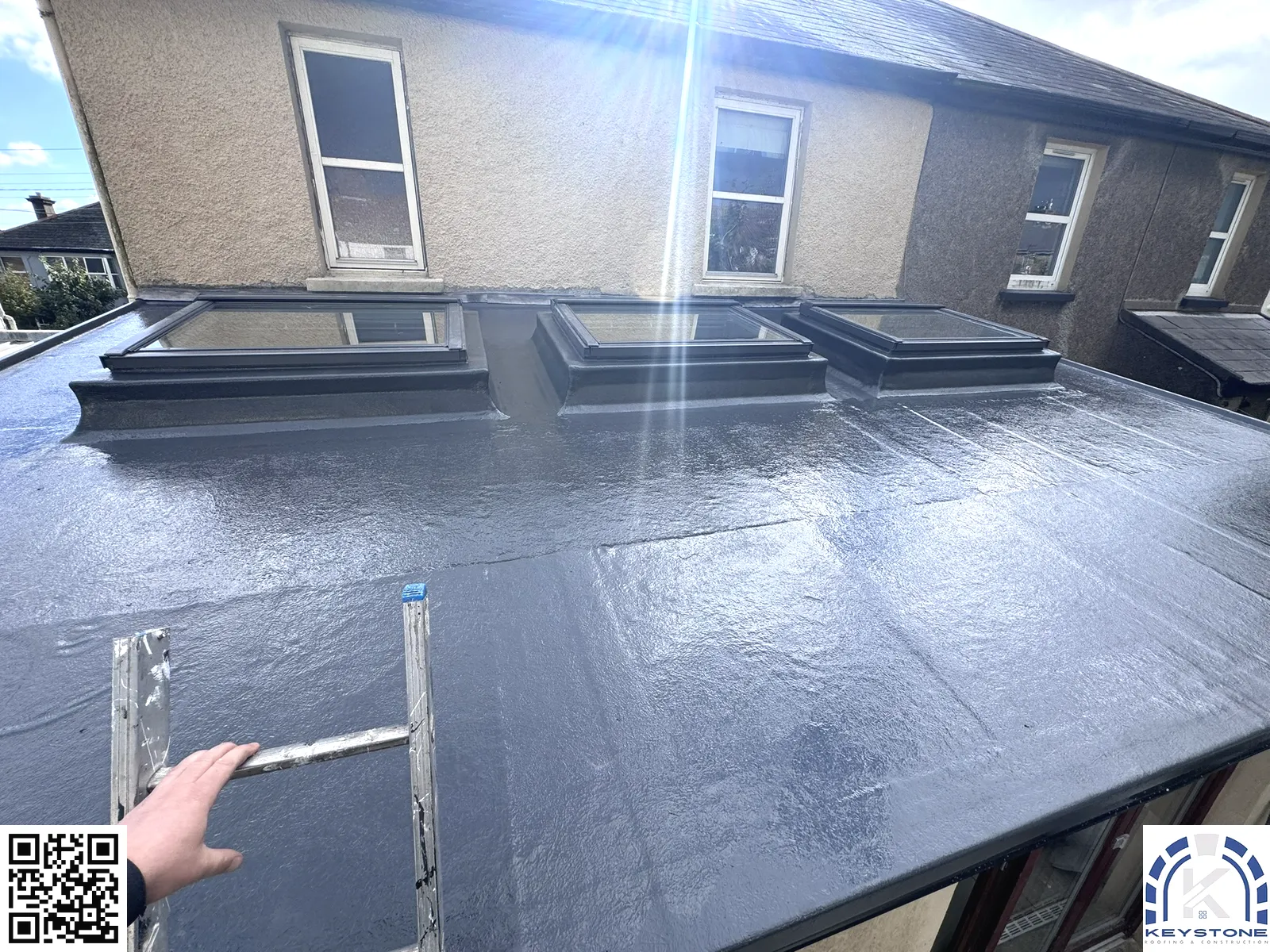
We assess the lining condition and repair or reline as required. Options include lead repair patches, liquid-applied waterproof coatings, and complete relining. Outlet clearance and drainage improvement may resolve overflow issues. We ensure adequate upstand heights and flashing integrity at all junctions.
Signs Your Gutters Need Repair
Identifying gutter problems early allows repair before water damage occurs. Here are the warning signs to watch for:
Visible During Dry Weather
Sagging or misaligned sections — Look along your gutter line from ground level. Gutters should run straight or with slight consistent fall toward outlets. Dips, sags, or uneven sections indicate bracket problems.
Gaps at joints — Visible separation between gutter sections suggests failed joints. Even small gaps leak significantly during rain.
Rust staining on gutters or below — Brown staining on or below gutters indicates rust, whether on cast iron gutters themselves or on steel fixings.
Peeling paint on gutters or fascias — Paint failure indicates moisture problems, often from leaks or overflow affecting surfaces.
Visible cracks or holes — Any visible damage to gutter profiles needs repair before rain exploits it.
Loose or missing brackets — Brackets visibly hanging loose or sections unsupported between brackets.
Plants growing in gutters — Indicates severe debris accumulation that has likely blocked drainage and stressed the gutter system.
Bent or damaged downpipes — Impact damage, displacement from walls, or visible cracks.
Visible During Rainfall
Water dripping at specific points — Indicates joint leaks or localised damage. Note the locations for repair.
Water overflowing along gutter length — Blocked gutters or downpipes, or insufficient capacity or fall.
Water cascading at corners or ends — End cap leaks or outlet blockages.
Water running down walls — Overflow or leaks allowing water to contact wall surfaces.
Splashing at downpipe bases — Disconnected shoes, broken pipes at ground level, or blocked drains not accepting downpipe discharge.
Gurgling sounds from downpipes — Partial blockages causing air bubbles as water forces past obstructions.
Signs of Water Damage From Gutter Failure
Damp patches on interior ceilings or walls — Water from gutter failures often enters at the roofline and tracks down inside walls before appearing as interior damp.
Peeling wallpaper or bubbling paint inside — Moisture from exterior water ingress affecting interior finishes.
Mould growth in corners or at ceiling junctions — Persistent dampness from gutter leaks creates mould conditions.
Staining on exterior walls below gutters — Algae, dirt streaks, or mineral deposits from regular water overflow.
Soft or spongy fascia boards — Timber saturated from persistent water contact.
Erosion or channelling at ground level below downpipes — Blocked or disconnected drains, or water overshooting drain positions.
Our Gutter Repair Process
Step 1: Problem Assessment
Every repair begins with proper diagnosis. We need to understand what is wrong, why it failed, and what repair will actually fix the problem — not just temporarily mask it.
We inspect the affected area from ladder or access equipment. We examine the failure point, the gutter condition generally, bracket and fascia condition, and downpipe function. For problems that are unclear from external inspection, we may test with water to observe behaviour.
We explain what we find in plain language. What is the problem? What caused it? What does repair involve? What will it cost? You have clear information to make decisions.
Step 2: Repair Quotation
For straightforward repairs where the scope is clear, we quote fixed prices immediately. You know the cost before we begin work.
For more complex situations — extensive damage, multiple issues, or uncertainties requiring investigation — we provide estimates and confirm final pricing once the full scope is clear.
All prices include labour, materials, and VAT. We do not add charges after quoting.
Step 3: Repair Execution
With approval, we complete the repair. For minor work, this is often immediate — same-day completion during the assessment visit. For larger repairs requiring materials we do not carry, we schedule return visits promptly.
We work safely at height using appropriate ladders, scaffolding, or access equipment depending on the property. Our team is trained in working at height procedures.
We use quality materials appropriate to your gutter type. Budget sealants and fittings that fail within a year are false economy. We fit materials that will last.
Step 4: Testing and Confirmation
After repair, we test to confirm the problem is resolved. For leak repairs, we run water through to verify water-tightness. For drainage repairs, we confirm flow through the system.
We explain what was done and any recommendations for ongoing maintenance or future attention.
Step 5: Cleanup and Completion
We collect any debris or old materials and remove them from your property. We leave the work area clean and tidy.
Payment is due on completion. We accept bank transfer, card, and cash.
Gutter Types We Repair
We repair all gutter types installed on Cork properties. Different materials have different failure modes and repair requirements.
PVC and uPVC Gutters
The most common gutter type on modern Irish homes. PVC gutters are lightweight, economical, and available in various profiles and colours.
Common profiles: Half-round, square, deep-flow, and ogee
Common colours: White, black, brown, grey, and caramel
Typical problems: Joint seal failures, bracket breakage, UV degradation causing brittleness, impact damage, frost cracking
Repair approach: Standard union connectors and fittings are readily available and interchangeable between major manufacturers. Most PVC gutter repairs are completed same-day from stock we carry. Older or unusual profiles may require ordering.
Lifespan: Quality PVC guttering lasts 20-30 years. Cheaper products may fail sooner, especially with UV exposure.
Cast Iron Gutters
Original gutters on many Victorian, Edwardian, and early 20th century properties. Cast iron is heavy, durable, but susceptible to rust if protective coatings fail.
Common profiles: Half-round, ogee, and moulded decorative patterns
Typical colours: Black (painted), though sometimes other colours on period properties
Typical problems: Rust and corrosion, joint failures (traditionally putty jointed), bracket corrosion, frost cracking of water-filled sections
Repair approach: Cast iron can be repaired, patched, or replaced section by section. We use appropriate sealants for joints rather than traditional putty. Surface rust can be treated and repainted. Through-rust requires patching or section replacement. Matching period profiles is possible through specialist suppliers.
Conservation considerations: For listed buildings or conservation areas, retaining original cast iron may be required. We can repair and restore cast iron gutters to extend their service life. Where replacement is acceptable, cast iron style aluminium provides authentic appearance without ongoing corrosion issues.
Aluminium Gutters
Aluminium gutters offer excellent longevity without the corrosion problems of steel or cast iron. Available in modern profiles and cast iron replica patterns.
Common profiles: Half-round, square, ogee, and period replica patterns
Typical colours: Powder-coated in various colours, typically black, white, or grey
Typical problems: Joint failures (aluminium moves significantly with temperature), bracket loosening, impact damage (aluminium dents more easily than other materials)
Repair approach: Aluminium gutter joints need flexible sealants that accommodate thermal movement. Damaged sections can be replaced individually. Colour matching powder-coated finishes requires sourcing from the same manufacturer or repainting.
Lifespan: Quality aluminium guttering lasts 30-50 years or more. It is an excellent long-term choice despite higher initial cost.
Copper Gutters
Premium guttering found on high-end and historic properties. Copper develops a distinctive green patina over time and lasts indefinitely with minimal maintenance.
Typical problems: Joint failures (copper is traditionally soldered), mechanical damage, and rarely, corrosion in specific conditions
Repair approach: Copper repairs require specialist skills including soldering. We can repair copper gutters, replace damaged sections, and restore failing joints. Patching is possible for localised damage.
Lifespan: 80-100+ years. Copper is effectively permanent if properly installed and maintained.
Steel and Pressed Metal Gutters
Galvanised steel gutters were common in the mid-20th century. Some commercial and agricultural buildings have pressed metal guttering.
Typical problems: Corrosion once galvanising fails, joint leaks, impact damage
Repair approach: Localised rust can be treated and painted. Severe corrosion requires section replacement. Galvanised steel replacement sections remain available. Alternatively, replacement with PVC or aluminium provides longer-term solutions.
Box Gutters and Parapet Gutters
Built-in gutters formed within the roof structure, typically found on Victorian terraces, Georgian properties, and some commercial buildings.
Lining materials: Lead, asphalt, felt, GRP, or liquid-applied membranes
Typical problems: Lining failure allowing water into roof structure, blocked outlets, debris accumulation, inadequate falls, failed upstand flashings
Repair approach: Lining repairs depend on the existing material and failure mode. Lead can be patched or overlaid. Felt and asphalt may need complete relining. Modern liquid membranes can overlay existing linings in some situations. Outlet clearing and drainage improvement often resolves overflow problems without relining.
Seamless Gutters
Continuous gutters formed on-site without joints along their length. Less common in Ireland but found on some properties.
Typical problems: Bracket failures (the main stress points without joints), damage at connections to downpipes, impact damage
Repair approach: Seamless gutters cannot be easily sectioned and repaired like jointed systems. Minor damage can be patched. Significant damage may require professional reforming of replacement sections.
Emergency Gutter Repairs
Some gutter problems cannot wait. Active leaks causing interior damage, gutters detached and hanging dangerously, or water pouring onto electrical installations need immediate attention.
We offer same-day emergency gutter repairs when available. Call 021 202 8469 and explain the urgency. If we can attend same-day, we will.
What Counts as Emergency
Active water ingress to interior — Water entering your home through failed gutters during rainfall. Every hour of delay means more damage.
Gutter detached and hanging — Sections that have pulled away from fascias creating falling hazards or risk of complete failure.
Water affecting electrics — Overflow or leaks directing water onto external electrical fittings, meter boxes, or entry points.
Damage to neighbouring property — Overflow or leaks directing water onto adjacent property causing damage or dispute.
Imminent further failure — Partial failures that will become complete failures with the next rainfall, where delay will significantly worsen the outcome.
Emergency Response
Emergency calls are prioritised. We aim to attend same-day where possible, though availability depends on existing commitments and your location.
Emergency attendance attracts a minimum charge of €70, which is absorbed into repair costs if work proceeds. This premium reflects the disruption to our schedule and the immediate response provided.
For genuine emergencies, temporary measures may be appropriate even if permanent repair requires follow-up. Stopping water ingress today is more important than completing perfect repairs while damage continues.
When to Repair vs Replace
Not every gutter problem justifies repair. Sometimes replacement makes more sense. Here is how to decide:
Repair Makes Sense When
- Problems are localised — One or two leaking joints, a single damaged section, or a few failed brackets can be repaired economically. The rest of the system is sound and will continue functioning.
- Gutters are relatively young — PVC gutters less than 15 years old, or aluminium and cast iron in good general condition, are worth repairing. Significant service life remains after repair.
- Matching parts are available — Standard profiles and common gutter systems can be repaired with readily available components. Repairs are quick and economical.
- Repair cost is significantly less than replacement — If repair costs 20-30% of replacement, repair is usually sensible. If repair costs 60-70% of replacement, the calculation changes.
- Cosmetic matching matters — Replacing one section of a continuous gutter run means visible differences between old and new. If appearance matters, repair or full replacement may be preferable to partial replacement.
Replacement Makes Sense When
- Problems are widespread — Multiple leaking joints throughout, pervasive corrosion, or brackets failing across the entire system suggests overall deterioration. Fixing one problem will be followed by another, then another.
- Gutters are old and degraded — PVC gutters over 25-30 years old become brittle and prone to failure. Cast iron with extensive rust is approaching end of life. Repair is postponing inevitable replacement.
- The profile is obsolete — Discontinued gutter patterns may have no available replacement parts. Repairs become increasingly difficult and expensive. Replacement with a current system simplifies future maintenance.
- Fascias need replacement — If fascia boards are rotten and need replacing, it makes no sense to remove gutters, replace fascias, and refit old gutters. New gutters with new fascias is the sensible approach.
- Previous repairs have failed — If gutters have been repaired multiple times and continue failing, the underlying system is worn out. Further repair is throwing money at a losing proposition.
- Appearance is unacceptable — Heavily stained, discoloured, or unsightly gutters can be replaced for improved appearance even if functionally adequate.
Making the Decision
We advise honestly. If repair makes sense, we recommend and quote repair. If repair is poor value and replacement is the better investment, we tell you — even though replacement costs more and we would earn more from it.
We would rather give honest advice and build long-term trust than maximise short-term revenue from work that does not serve your interests.
Fascia and Soffit Repairs
Fascia and soffit condition directly affects gutter function. Gutters attach to fascias; if fascias are rotten, brackets cannot hold securely. Water damage from gutter failures often affects fascias first.
We repair and replace fascia and soffit boards alongside gutter repairs or as standalone work.
Fascia Board Problems
Rot and soft spots — Timber fascias saturated from gutter overflow or leaks become soft and eventually rot. Probe suspected areas with a screwdriver — sound timber resists; rotten timber penetrates easily.
Paint failure — Peeling, flaking, or bubbling paint indicates moisture problems. Paint fails from behind when water reaches the timber.
Warping and bowing — Moisture absorption causes timber to warp. Bowed fascias prevent gutters hanging correctly.
Pulling away from rafters — Fixings fail, timber shrinks, or rafter ends deteriorate, causing fascias to separate from the roof structure.
Soffit Board Problems
Rot and deterioration — Soffits exposed to water running behind gutters deteriorate similarly to fascias.
Ventilation grilles blocked — Soffit vents clogged with debris, paint, or insect nests compromise roof ventilation.
Gaps and openings — Failed joints or damaged sections allow birds, insects, and pests into roof spaces.
Repair Options
Timber fascia and soffit repair — Localised rot can sometimes be cut out and patched with new timber or resin fillers. Sound timber can be rubbed down and repainted.
Timber fascia and soffit replacement — Severely damaged boards are replaced with new treated timber. New boards require priming and painting.
uPVC fascia and soffit cladding — Existing timber can be clad with uPVC boards, providing maintenance-free finish. Original timber provides backing; uPVC provides weather face.
Full uPVC replacement — Timber fascias and soffits removed and replaced with uPVC boards. No future painting required. Popular for reduced long-term maintenance.
Gutter Repair for Different Property Types
Terraced Houses
Terraced houses often share continuous gutter runs with neighbouring properties, or have gutters running across party walls. Repairs near boundaries require care to avoid affecting neighbours.
Where gutters are shared or interconnected, we communicate with neighbours as appropriate. Water flows do not respect property boundaries — a repair on your section affects drainage from adjacent properties.
Victorian and Edwardian terraces often have original cast iron gutters that merit preservation or careful replacement with matching profiles.
Semi-Detached Houses
Semi-detached properties typically have gutters on three sides with party wall at the fourth. Access to rear gutters may involve passing through side access.
We assess access routes before quoting. Narrow side passages, gates, or obstacles affect equipment access and working time.
Detached Houses
Detached houses have gutters on all elevations. More gutter length means more potential failure points, but repairs to any section do not affect neighbouring properties.
Large detached properties may have multiple roof levels, dormers, and extensions adding complexity. We assess the complete installation when quoting repairs.
Bungalows
Bungalow gutters are typically lower and easier to access than two-storey properties. However, bungalows often have larger roof footprints relative to gutter length, meaning gutters handle proportionally more water.
Dormer bungalows combine lower main gutters with higher dormer sections requiring different access approaches.
Period Properties
Victorian, Edwardian, Georgian, and other period properties often have cast iron or lead guttering that requires specialist handling. Conservation considerations may affect material choices.
We have experience with period properties and can advise on repair approaches that maintain architectural character while providing reliable function.
Listed buildings and conservation area properties may have planning restrictions on alterations. We advise on requirements and work with conservation guidelines where applicable.
Commercial Properties
Commercial properties often have different gutter configurations — longer runs, larger profiles, industrial specifications, or flat roof drainage systems.
We complete commercial gutter repairs across Cork. Industrial units, offices, retail premises, schools, churches, and other commercial buildings are all within our scope.
Commercial repairs are quoted individually based on access requirements, gutter type, and scale.
Preventing Future Gutter Problems
After repairing your gutters, these practices help prevent future problems:
Regular Cleaning
Most gutter problems begin with blockages. Debris accumulation leads to standing water, which accelerates seal degradation, adds weight causing sagging, and prevents drainage causing overflow.
Annual gutter cleaning for most properties — more frequently if you have overhanging trees — is the single most effective preventative measure. A cleaning costing under €150 prevents repairs costing several times more.
Prompt Attention to Problems
Small problems become large problems if ignored. A minor drip at a joint today becomes a failed seal, water-damaged fascia, and interior damp next year.
Address gutter issues when you first notice them. Early repair is always cheaper than delayed repair.
Tree Management
Overhanging trees deposit leaves, seeds, twigs, and sap directly into gutters. If possible, trim branches back from the roofline. If trees cannot be pruned, accept that more frequent gutter cleaning is necessary.
Gutter Guards
For properties with heavy tree debris, gutter guards reduce blockage frequency. Guards do not eliminate cleaning requirements but significantly extend intervals between necessary maintenance.
We can advise whether guards would benefit your property and install appropriate systems.
Periodic Inspection
A brief visual check of your gutters from ground level takes minutes and identifies developing problems before they cause damage. Look for sagging, visible gaps, plant growth, staining on walls below, and any obvious damage.
After major storms, a quick inspection catches wind damage and debris accumulation before the next rainfall exploits vulnerabilities.